Online Personal Training vs In-Person Training: Which Is Better for Your Fitness Goals?
By Anthony Lee, CEO and Personal Fitness Trainer at Activ8 Lifestyle & Fitness
A few years ago, this debate was pretty simple. If you wanted a personal trainer, they stood beside you. If they weren’t physically there, they weren’t really your trainer. Then the world changed. Video calls became normal, people started working from home and online coaching exploded. Suddenly, you could have a personal trainer in your living room, garden, hotel room, or home gym without them ever setting foot there. Fast forward to today and one of the most common questions I get asked is: “Anthony, do I actually need an in-person trainer, or can I just work with someone online?” The answer isn’t nearly as straightforward as people think.
Some swear by online coaching. Others wouldn’t dream of training without someone physically standing next to them. Both sides have strong arguments and, if I’m being honest, both sides have a point. So rather than giving you the predictable “it depends” answer and leaving it there, let’s settle this the only sensible way. By putting them in the ring.
So, ding ding ding. In the blue corner, weighing in with flexibility, convenience, and zero travel time, we have the Online PT. And in the red corner, bringing accountability, real-time corrections, and the occasional terrible joke, the In-Person PT. Let’s see who comes out on top.
Round One: Convenience
And the Online PT comes out swinging: “No commuting, rushing across Dubai traffic or coordinating locations. You can train from your living room, your garden, your office gym, or even a hotel room if you’re travelling.” It is a strong start. For busy professionals, frequent travellers, and parents trying to fit exercise around family life, online training can be a game changer. You’re still working with a coach, but without the logistics. Not all online coaching looks the same either. Some people follow a programme independently with a weekly check-in, while others have a coach live on screen guiding every repetition in real time. Both have their place, but they offer very different levels of support, accountability and flexibility. The In-Person PT nods respectfully. This round goes to the Online PT. Winner: Online Personal Training
Round Two: Technique
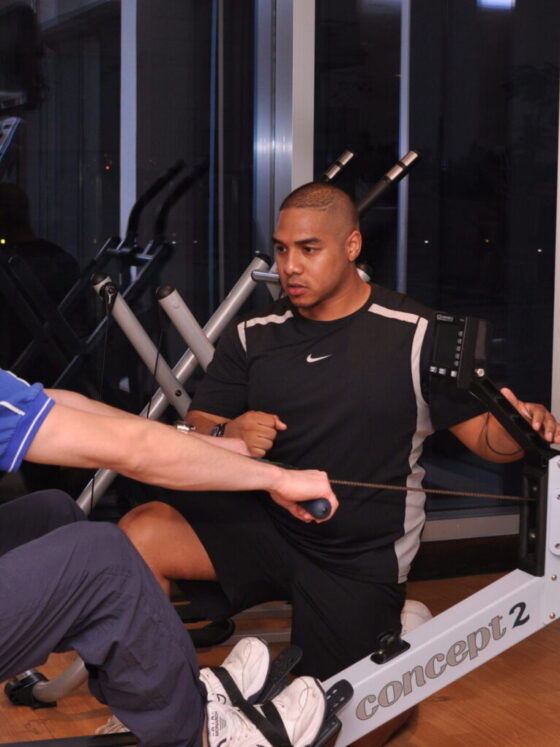
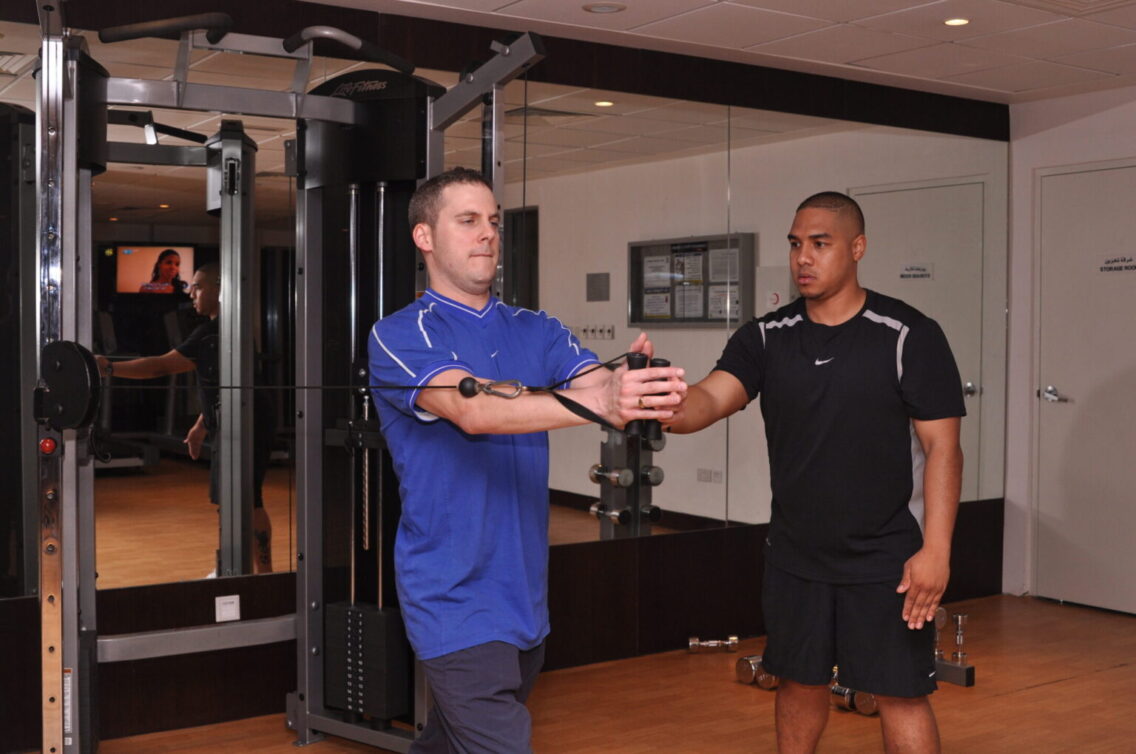
Ding ding ding. The In-Person PT wastes no time. “How deep was that squat?” “Why is your right shoulder doing something completely different to your left?” “Slow down. You’re lifting the weight, not launching it into orbit.” This is where in-person coaching shines. A good online coach can absolutely correct technique. They can see a lot through a screen. But they can’t always see everything. The angle of a movement, the depth of a repetition, whether you’re shifting your weight without realising it or even whether you’ve picked the right weight in the first place. Too heavy and technique disappears and too light and you’re never challenged enough to progress. Those are tiny adjustments that are much easier to spot when you’re standing a few feet away rather than looking through a phone screen. It is the subtle details that can make the difference between progress and frustration. The In-Person PT lands a clean shot. Winner: In-Person Personal Training
Round Three: Accountability
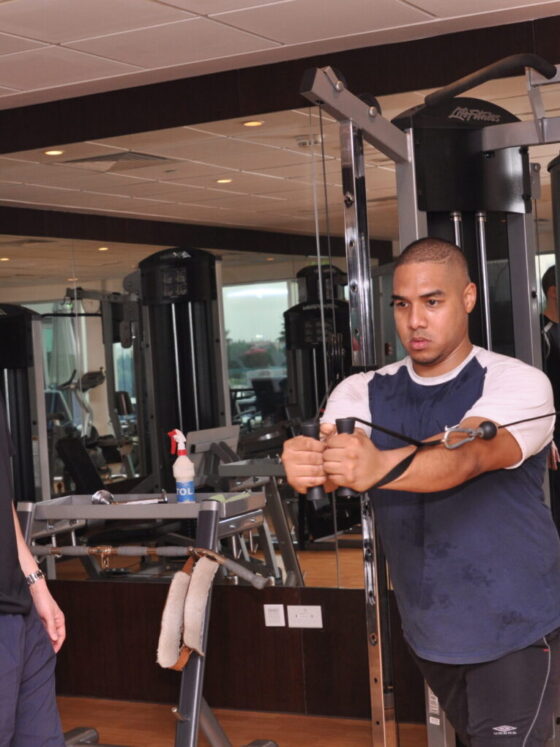
The Online PT continues confidently. “I’ve put the session in the diary.” The client replies: “Sorry, something came up.” We’ve all been there. To be fair, an in-person session can be rescheduled too. Life happens, meetings run over, kids get sick, and work can explode out of nowhere. Neither option is immune from cancellations. But let’s be honest for a second. Isn’t it slightly easier to cancel a video call than a face-to-face meeting? There’s also another layer to it. Most personal trainers work on pre-booked sessions, so cancelling at the last minute could mean losing that session altogether. Suddenly there’s a financial investment attached to showing up as well as the personal commitment. There’s something about knowing another human being has travelled to see you, blocked out that time specifically for you, and is standing at your door, in your building gym, or waiting for you downstairs. Suddenly that Netflix episode doesn’t seem quite as urgent or that snooze button becomes a little less tempting.
Now, a good online coach isn’t disappearing after the call ends. They’ll still follow up, check in, and keep you accountable. Some people thrive with that level of independence and don’t need someone physically standing beside them. But there is a different level of commitment that comes from showing up for another person, not just yourself. Sometimes the hardest part of exercise isn’t the workout. It’s getting there. And in-person training makes it much harder to talk yourself out of it. Winner: In-Person Personal Training
Round Four: Flexibility
The Online PT is coming back swinging. Delayed flight? Last-minute meeting? Kids suddenly off school? Life has a habit of throwing curveballs, and this is where online coaching really earns its place. Rather than cancelling altogether, you can often log in from your hotel room, home office, living room, or wherever the day happens to take you. For busy professionals, frequent travellers, and anyone juggling multiple responsibilities, that flexibility can be the difference between maintaining momentum and falling into the familiar trap of “I’ll start again next Monday.” When consistency is often the biggest predictor of results, making it easier to show up counts for a lot. The In-Person personal training takes the hit and smiles. Fair play. Winner: Online Personal Training
Round Five: Personalisation
Now things get interesting. Because both coaches claim it is their round. The Online PT says, “I know my clients’ goals, limitations, routines, injuries and challenges.” The In-Person PT says exactly the same thing. And they’re both right. The quality of coaching matters more than the location of coaching. A great online coach will always beat a poor in-person coach. A great in-person coach will always beat a poor online coach. The location doesn’t create results, the quality of coaching does. Experience, communication, adaptability and understanding the client will always matter more than whether your trainer is standing beside you or talking to you through a screen .This round isn’t about where the coach is, but about how good they are. Winner: Draw
The Final Decision
The judges have tallied the scorecards. Online coaching wins for convenience and flexibility. In-person coaching wins for accountability and precision. Neither has been knocked out. The truth is, most people aren’t choosing between good and bad. They’re choosing between what suits their life right now. If you’re experienced, disciplined, and confident in your technique, online coaching can work brilliantly. If you’re new to training, struggling with consistency, or not seeing results despite your efforts, having a coach physically beside you can be worth its weight in gold. Even the world’s best athletes have coaches watching, correcting, and guiding them. Joe Bloggs from The Greens probably doesn’t need less support than an Olympic athlete. So the final bell goes. The fight is over. No knockouts this time and they will be ready to fight another day.