Sakcshei Mathur on High-Performance Living: Mindset & Energy Alignment
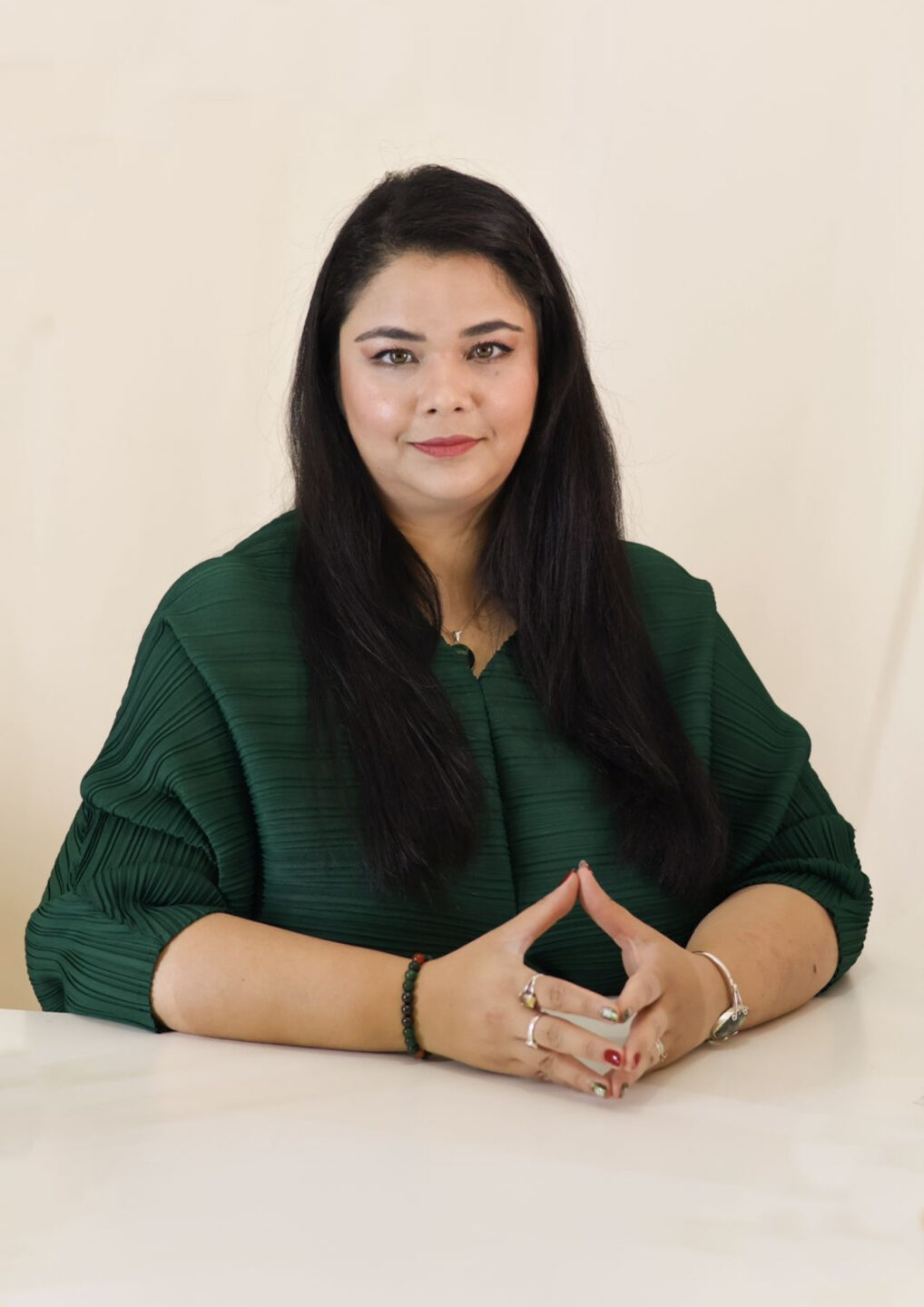
In the relentless pace of modern life, high-achievers often push themselves to the limit—meeting targets, ticking boxes, and performing under pressure—while quietly running on empty.
Sakcshei Mathur, Energy & Mindset Alignment Coach and Founder of Celestial Karisma, helps individuals recognise the subtle signs of mental and emotional overload before they become unmanageable.
In this exclusive conversation, she reveals how subconscious beliefs shape our decisions, why inner child healing is key to unlocking self-worth, and how aligning energy with mindset can create lasting transformation. From practical daily tools to profound mindset shifts, Sakcshei offers a blueprint for thriving, not just surviving, in today’s fast-paced world.
You work with high-functioning individuals navigating pressure and performance, what are the most common signs of mental and emotional overload people tend to ignore?
The most telling signs are often the quietest ones. Disrupted sleep, persistent brain fog, and unexplained headaches are the body’s earliest distress signals, and most high-performers simply override them.
What concerns me most, however, is the loss of joy while still functioning. You’re hitting your targets, showing up, delivering, but nothing feels rewarding anymore. That emotional numbness is a serious red flag. Add to that a shorter fuse and a tendency to lose emotional regulation in situations that wouldn’t have bothered you before, and the picture becomes clear. The body and mind are telling you something. High-functioning individuals could truly transform their performance by simply learning to tune into their own body first.
Your work focuses on subconscious mind re-wiring. How do limiting beliefs quietly shape our confidence, decisions and relationships over time?
I think of the subconscious mind as the application running silently in the background of everything we do, quietly powering every decision, every reaction, every relationship dynamic, often without us even realising it. When we hold a limiting belief, it is essentially a glitch in that system. It whispers to our conscious mind that something isn’t possible, or that an obvious truth simply isn’t real. It is a form of self-gaslighting, subtle, persistent, and deeply corrosive over time.
Left unaddressed, limiting beliefs can affect your relationships, your career, your ability to grow a business, even your capacity to earn. In my experience, they can also manifest in the physical body as chronic pain or recurring illness. The subconscious doesn’t differentiate between what is true and what it has been conditioned to believe. That is precisely why re-wiring it is so transformative.
For someone feeling stuck or out of alignment, what are the first steps to becoming more aware of their internal patterns?
The first step always begins with self-reflection, and crucially, from a non-judgmental place. Ask yourself honestly: is this how I want my life to look? If the answer is no, the next move is to take accountability. Not blame, accountability. There is a significant difference. When we blame our environment or the people around us, we hand over our power. When we recognise that what shows up on the outside is simply a reflection of what already exists on the inside, we reclaim our agency. That shift alone, from victim to author of your own life, is where real change begins.
Inner child healing is a key part of your approach, how do early experiences continue to influence adult behaviour and emotional responses?
The blueprint of our behaviour is written in childhood. Whether through direct instruction from a parent or caregiver, or simply through observing how the adults around us lived and responded to the world, we absorb it all. A child below the age of 12 is essentially a sponge. At that age, children simply don’t have the awareness to discern what is healthy from what is harmful, so they accept their environment as the norm and carry those patterns well into adulthood.
Hypothetically speaking, fear of a parent could possibly translate into deep-seated authority issues in adult life; Or a lack of nurturing in early years could show up as commitment issues in adult relationships. These patterns stay hidden, until we are ready to face them.
How can individuals begin to shift from self-doubt to a stronger sense of self-worth in a practical, sustainable way?
It begins with a genuine will to change, not just a wish, but a decision. From there, it requires a real commitment to investing in yourself: emotionally, mentally, and yes, financially too. We rarely hesitate to invest in our outer appearance, yet we hesitate when it comes to our inner world.
I know this firsthand. I spent years being my own last priority before I understood that self-worth isn’t selfish, it is foundational. Practically speaking, building self-worth looks like setting strong boundaries and actually holding them. It looks like making peace with the fact that not everyone will like you, and being entirely okay with that. It looks like trusting your own decisions without constantly seeking external validation. Self-worth isn’t built in a single breakthrough moment. It is built in the small, daily choices you make to honour yourself.
You often speak about energy and mindset alignment, what is the connection between the two, and why is it so important for personal growth?
Your energy is the fuel that runs your life, and your mindset is the engine that drives it. You need both, and they need to be working in harmony. We don’t control our circumstances. Life will always bring its share of challenges and curveballs. But our mindset determines everything about how we respond to them. A misaligned mindset will drain even the most abundant energy, and equally, low or blocked energy will undermine even the most positive thinking. When the two are in alignment, you move through life with a sense of clarity, purpose and momentum that is genuinely transformative.
In today’s fast-paced world, stress and overwhelm are almost constant. What are some simple, everyday tools people can use to manage emotional blocks?
I say this from personal practice – Dedicate at least one hour of the day for yourself alone. Whether that is quiet time, movement, or simply personal space, guard it fiercely. Incorporate one breathing exercise into your daily routine. The breath is one of the most immediate tools we have to regulate the nervous system. Journal regularly. Writing offloads the overload from your mind onto the page, and solutions often emerge in that newfound clarity. And finally, stay hydrated. It sounds overly simple, but dehydration significantly amplifies stress and negative thinking in ways most people completely underestimate.
Life transitions can be particularly challenging. How can people build emotional resilience during periods of uncertainty or change?
This may be a slightly controversial take, but I believe resilience isn’t something you consciously build in preparation. It develops over time through mindset and lived experience. True emotional resilience is the ability to stare uncertainty in the face, fact-check your fears rather than spiral into them, and hold enough space for yourself to regulate before moving into action. It is not about being unaffected by the storm. It is about not losing yourself in it.
If someone could make just one mindset shift to transform their life, what would you want that shift to be?
A genuine, practiced “attitude of gratitude”. There is a principle I return to often: your attention goes where your awareness flows. When you train your awareness to seek out what is already working, what you already have, what is already worthy of appreciation, you begin to build from a foundation of abundance rather than from a place of lack. Many people are so focused on the gaps in their lives that they unknowingly deepen them. Shift that focus. Count your blessings, not as a spiritual cliché, but as a deliberate, daily practice. Build from there. That single shift can quietly change everything.
Life is rarely black or white. There is so much that lives in between. We are so conditioned to assign everything to one polarity or another, when the real work has always been simpler, and far more personal: reflect, evolve, and keep going.