Skin Barrier First: Why Healing Matters More Than Brightening in Hot Climates

By Dr Taniyaa Bakshhi, Brand Lead of Sunny Herbals and Managing Director of Bakson Group
There is a particular kind of skincare frustration that is almost exclusive to this region. Not the frustration of someone who has given up, but of someone doing everything right, or everything they have been told is right, and watching their skin stay dull, reactive, and uneven in a way that feels almost personal. The hyperpigmentation that deepens every summer. The sensitivity that arrived somewhere between the vitamin C and the glycolic acid and never quite left. What is actually happening, in most of these cases, is that the skin barrier has been quietly breaking down, and every brightening product applied on top of it is making the situation worse. It is one of the most common patterns in dermatology clinics across the Gulf, and it is almost entirely avoidable once you understand what is happening beneath the surface.
The Climate Is Doing More Damage Than You Think
The UAE is, by any dermatological measure, one of the most demanding environments in the world for skin. The UV index here regularly sits at 9 and above, a level the World Health Organization classifies as very high, for a significant portion of the year. But UV is only part of the story. There is the constant movement between outdoor heat exceeding 45 degrees and indoor air conditioning that strips humidity to almost nothing. Then of course there is the fine desert dust settling invisibly on skin throughout the day. On top of this, heat is driving excess sebum production, which interacts with SPF, makeup, and pollution simultaneously.
In most parts of the world, skin gets some recovery time due to the fluctuating seasons. Here, the assault is relentless and year-round. Most people living in the region have been in a state of chronic barrier stress for so long they have stopped recognising it as damage. They simply think this is their skin, which is not true. It is their skin in survival mode.
Why Your Brightening Routine Might Be the Problem
This is the part that reframes everything. The most popular ingredients for treating hyperpigmentation in this region, such as glycolic acid, lactic acid, high-concentration vitamin C, and retinoids, are also, when layered onto already-compromised skin, among the most reliable ways to make pigmentation worse. The reason is biological. Deeper skin tones, which encompass the majority of skin types across the Arab world and South Asia, carry a higher density of melanocytes that are acutely sensitive to inflammation. When the skin is irritated, even at a level that feels entirely manageable, those melanocytes interpret the signal as damage and respond by producing more melanin.
What this means in practice is that an aggressive brightening routine applied to stressed skin does not neutralise pigmentation. It feeds it. The acids cause low-grade irritation. The irritation triggers melanin production. The dark spots deepen. The response is to reach for something stronger. The barrier weakens further. The cycle continues, completely self-reinforcing, beneath a routine that was genuinely well-intentioned.
What Barrier Repair Actually Looks Like
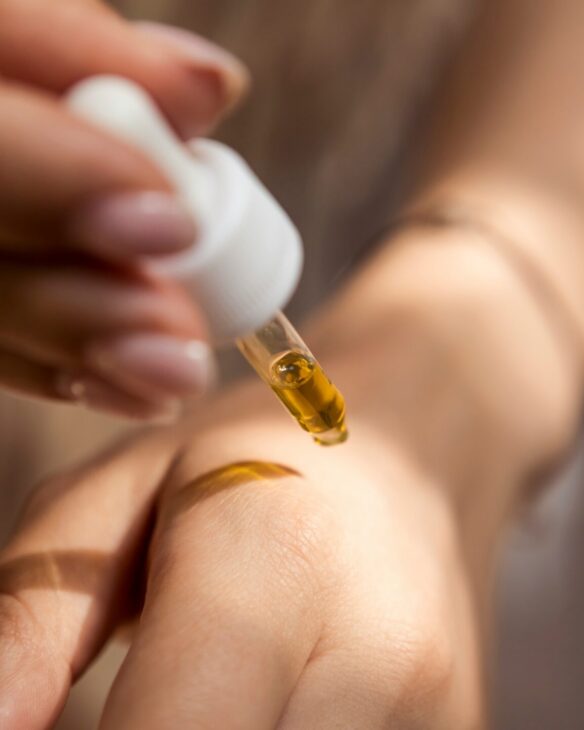
The skin’s capacity to repair itself is remarkable when given the right conditions, and the approach is simpler than most people expect. The first step is restraint. Exfoliating acids, retinoids, and high-concentration vitamin C should be removed from the routine entirely for four to six weeks. Not reduced. Removed. The goal is to stop generating inflammation so the skin can redirect its energy toward structural repair. Most people find that within two to three weeks, before anything new has even been introduced, their skin looks calmer and more even than it has in months.
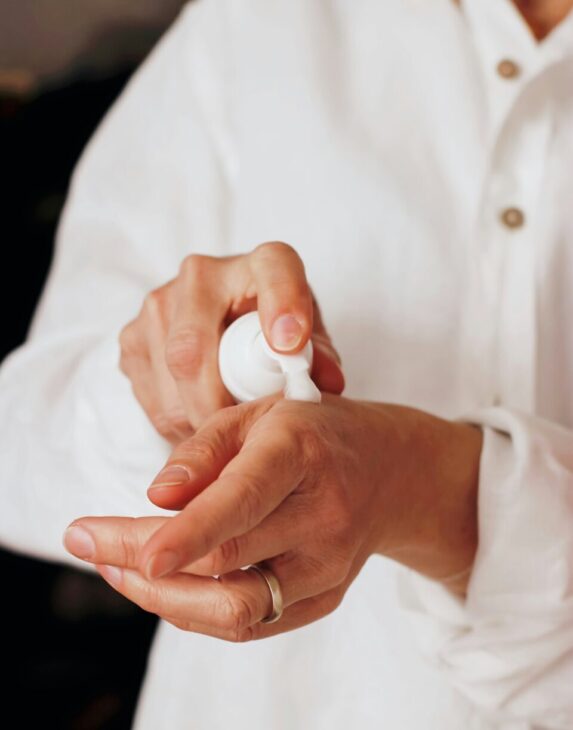
Cleansing deserves more attention than it typically gets. Sulphate-based foaming cleansers strip the skin’s lipid layer twice a day, meaning the barrier is being damaged before any other product is applied. A low-pH cream or gel cleanser that leaves skin feeling balanced rather than squeaky clean is the appropriate standard in this climate.
The rebuilding phase centres on ceramides, fatty acids, and cholesterol, which physically restore the lipid structure between skin cells, alongside panthenol, which accelerates cellular repair, and niacinamide, which calms inflammation while quietly inhibiting melanin transfer. It addresses pigmentation and supports healing at the same time, which makes it one of the most intelligent ingredients available for skin in this region.
And then there is SPF, which in this climate is not a finishing step but the single most consequential product in the entire routine. Broad-spectrum SPF 50 every morning is non-negotiable. For deeper skin tones, a tinted mineral sunscreen containing iron oxides provides additional protection against visible light, which also drives melanin production and is not blocked by standard chemical filters.
Once the barrier has stabilised, brightening actives can return. Tranexamic acid and azelaic acid are the most appropriate starting points, targeting melanin production without the inflammatory risk of stronger acids. Retinoids and exfoliating acids can follow, slowly, at low concentrations, with rest days built in. At this stage, on skin that has actually been allowed to heal, they will finally perform the way they were always supposed to.
The pursuit of brightening in this climate is not unrealistic. But it requires a different starting point than what global beauty marketing tends to prescribe. Heal the barrier first. Protect it every single day. Then brighten. For anyone living in this climate, that is not the cautious path. It is the only one that works.