Aly Rahimtoola on Precision Wellness and the Future of Longevity
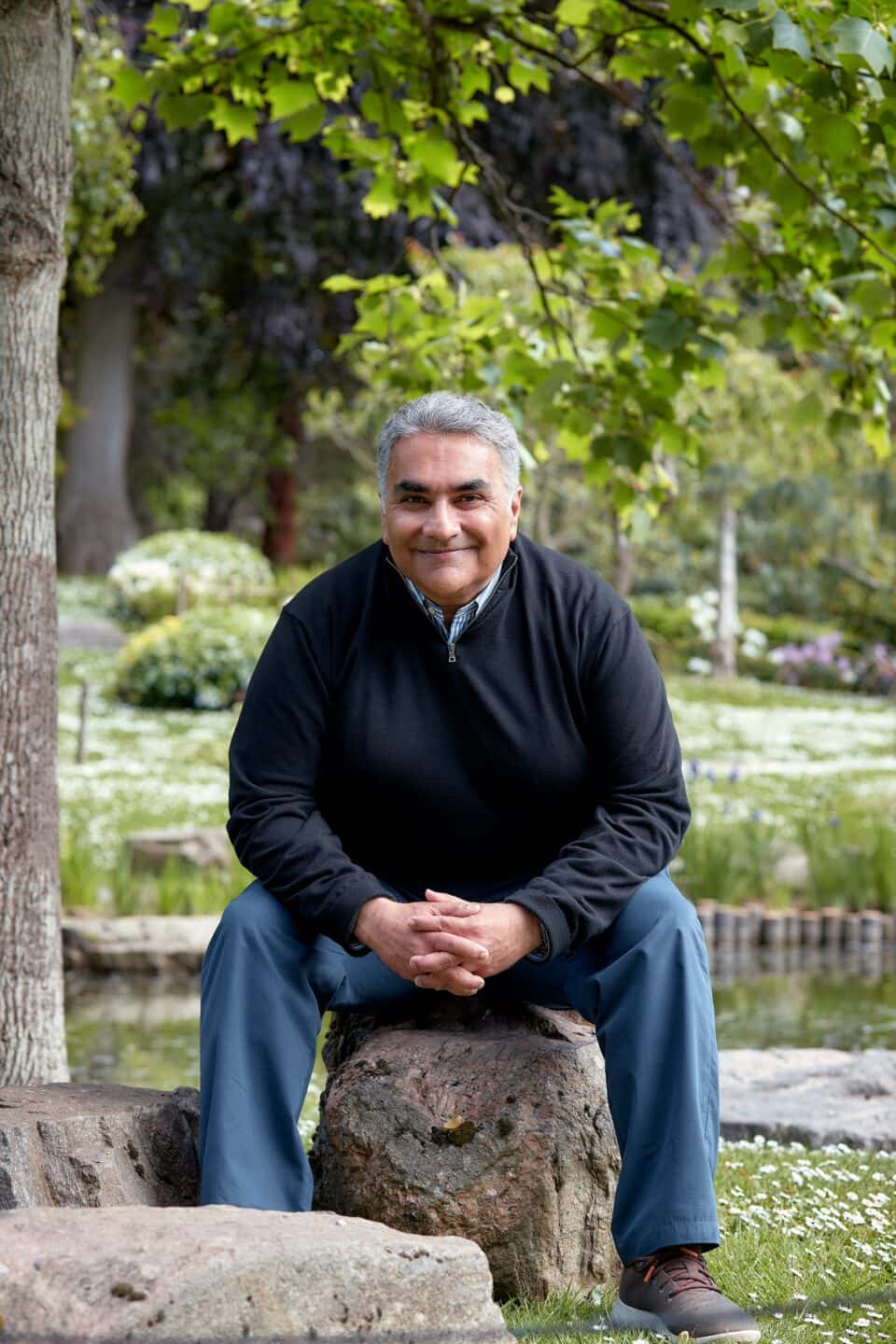
In a wellness world full of fads, buzzwords, and “one-size-fits-all” advice, Aly Rahimtoola, Founder & CEO of Bien-Etre, is redefining what it means to truly care for your health. With the region’s first precision-focused, AI-driven Longevity-as-a-Service platform, Bien-Etre replaces guesswork with actionable insights, translating complex biomarker data into daily strategies that optimise your biology before symptoms even appear.
In this exclusive interview, Aly explains how proactive, data-led wellness can empower anyone to take control of their health, live longer, and feel better, without the elitism or overwhelm often associated with longevity science.
What does replacing “guesswork” with precision look like for a client?
For most people, wellness is a series of shots in the dark, a new supplement because a friend mentioned it, a generic “clean” diet pulled from Instagram, or a protocol based on what worked for someone with completely different biology. None of it measured. None of it verified.
At Bien-Etre, your first visit is a data-driven interrogation of your biology. We don’t ask how you feel in isolation, we map your unique biomarkers to understand why you feel that way. NAD+ levels, inflammation markers, cortisol patterns, metabolic function, the numbers that actually matter.
Think of it this way: most wellness is off-the-rack. We deliver bespoke, a blueprint where every single recommendation is backed by your own cellular data, not population averages. That’s the difference between guessing and knowing.
How are your AI-driven diagnostics different from standard health tests?
Standard tests are designed to find disease. Ours are designed to find optimal function. That’s a fundamentally different starting point.
When you visit your GP or clinic, the blood test looks for “normal” ranges, which, let’s be honest, are averages derived from a largely unhealthy population. If you fall within range, you’re told you’re fine. But “normal” and “optimal” are not the same thing. Not even close.
Our plan is for AI to synthesize thousands of data points, not just what your levels are today, but the trajectory of where they’re heading. It identifies patterns and micro-shifts that would never register as “abnormal” on a traditional lab report. By the time a conventional test flags something, you’ve already lost years of intervention potential.
We’re not taking a snapshot. We’re building a predictive map of your health, and acting on it before the problems become visible.
Why is a proactive model so vital for longevity?
Because the current system is reactive. You get sick and then go to see a doctor. That’s not healthcare, that’s damage control dating back to the 19th century.
By the time symptoms appear, the underlying biological “debt” has typically been accumulating for a decade or more. Cellular decline, chronic inflammation, mitochondrial dysfunction, these don’t announce themselves. They compound quietly until one day the bill comes due.
Longevity isn’t about fixing what’s broken. It’s about preserving the integrity of the system while the body still has high potential, the capacity to respond, repair, and adapt. Proactivity allows us to intervene at the cellular level and slow the biological clock rather than scrambling to wind it back after the damage is done.
The science is clear: the earlier you measure and intervene, the greater the compounding benefit. That’s what precision prevention actually means.
How do you translate complex data into realistic daily actions?
Data without direction is just noise. And the wellness industry is drowning in noise.
We act as the biological translator. We take a complex biomarker report, the kind that would make most people’s eyes glaze over, and distil it into what we call High-Leverage Actions. Not 50 things to change. Not a 30-page protocol. The three specific shifts, a nutrient timing adjustment, a targeted supplement, a specific recovery protocol, that will move the needle the most for your body, based on your data. We are humans, not machines, and we have to live and enjoy life, so at Bien-Etre we don’t advocate the “one of those 87 supplements a day” approach; we focus on 2 or 3 main levers you can control to add life to your years.
That’s the gap between information overload and implementation, and it’s exactly where most wellness platforms fail. We close that loop.
How is Bien-Etre making longevity science accessible to everyone?
Longevity shouldn’t be a luxury reserved for Silicon Valley biohackers or the ultra-wealthy with private concierge doctors. That model is broken, and frankly, it’s elitist.
We’ve stripped away the gatekeeping and the jargon. By focusing on actionable longevity, not theoretical longevity, we make the science relevant to the high-performing professional, the busy parent, the weekend athlete. People who don’t have time for complexity but deserve access to the same calibre of insights.
We’ve taken what was an elite science and turned it into a practical lifestyle framework. You don’t need a lab in your basement or a PhD in molecular biology. You need the right data, the right interpretation, and a clear protocol you can actually follow. That’s what we deliver, and we have partnered with Tabby so the cost can be spread out to make it affordable.
What are common hidden imbalances you see in “healthy” people?
This is where it gets interesting, and a little uncomfortable for people who think they’re “fine.”
The most frequent stealth issues we uncover are chronic low-grade inflammation and early-stage insulin resistance, both of which routinely hide behind a fit exterior. You can run marathons and still be metabolically compromised. We also see significant micronutrient gaps; Magnesium, Vitamin D, B12, alongside cortisol dysregulation that’s driving burnout at the cellular level.
These people look healthy on the outside. They exercise, eat reasonably well, tick all the conventional boxes. But their internal machinery is running hot, and that translates to accelerated ageing, declining cognitive performance, and a health trajectory they haven’t started to feel. Yet.
That’s precisely why we measure. Because “feeling fine” is not a biomarker.
What is the one mindset shift people should take away?
Stop being a passive patient. Start being the CEO of your own health.
Most people treat their health like a black box, something they hand over to a doctor only when it fails. They wouldn’t run a business that way. They wouldn’t manage their finances that way. Yet they’ll go decades without understanding a single metric about the machine they rely on every day.
The Bien-Etre philosophy is built on radical ownership. Your health isn’t something that happens to you, it’s an asset you actively manage. Every daily choice is a vote for the person you’ll be in twenty years. Once that clicks, everything changes.
Measure. Understand. Act. Repeat. That’s not a slogan, that’s a system.